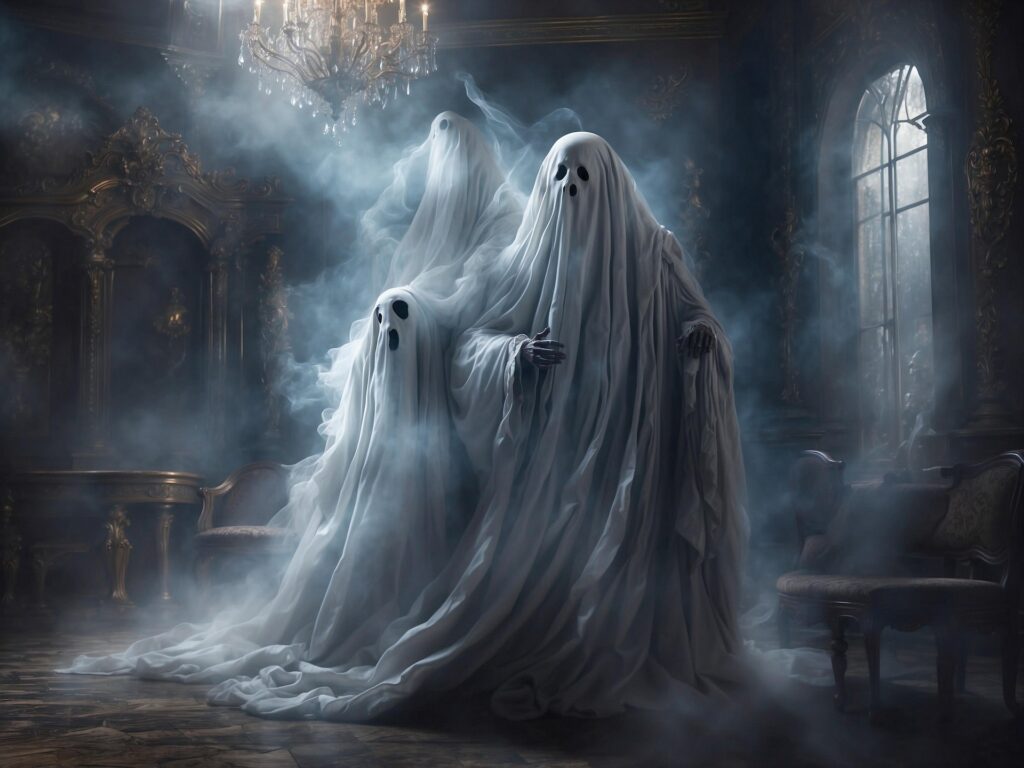
“Age-old horror is a hydra with a thousand heads…” – H.P. Lovecraft
I have, of late, found myself drawn to the idea of trying my hand at writing horror. Up until now, the only forays I have made into the genre were a few fanfiction pieces. Of course, I have never been a fan of horror, save for the older stuff.
Sure, I read the classics, Frankenstein, Dracula, Dr. Jekyll and Mr. Hyde, The Phantom of the Opera, and most things by Edgar Allen Poe; these were the extent of my fascination. It was while trying to find a definite villain for a steampunk series I was working on I stumbled across H. P. Lovecraft. I knew who he was, but had never given the Cthulhu mythos more than a passing glance. Until now. In rediscovering Lovecraft, I have found a whole new world of writers. (I will introduce you to some of those men and women later.)
Here is a quick look at the history of the type of horror I am drawn to so you can see why it is my new obsession. We will start with…
Horror: The Written Word
The supernatural has been a part of mankind’s history since the beginning, first in oral then written form. Myths, legends, and lore often used supernatural beings as warnings to future generations. Though scary and somewhat nerve wracking these tales did not automatically qualify as horror stories.
If I asked you to name the first true horror novel, how would you answer? Would you guess Dracula by Bram Stoker? Written in 1897, this novel comes too late to claim the title. What about Mary Shelley’s Frankenstein? Is 1818 far enough back? Although it has the distinction of being the first science fiction novel, again, the answer is no. The first true horror novel was The Castle of Otranto, written in 1764 by Horace Walpole. I actually read it not long ago, and it was very engaging.
Novel Ideas
Among the writers I have recently discovered is M. R. James, who wrote some of the best ghost stories. Though recognized for stories mostly without ghosts, Charles Dickens dabbled in the haunted realms a time or two and did some mighty fine work. Another fine author was Edith Wharton; I am actually waiting for a collection of her ghost stories to arrive as I write this. And since I mentioned Edith Wharton, let’s also mention one of the other things I like about the horror genre.
Readers of horror (and to a certain extent, fantasy and science fiction) were less concerned with the author’s gender than other fields of employment. As long as the writing was good, readers would devour it. That isn’t to say there wasn’t discrimination. Many women would write using male pseudonyms or gender-neutral names, but acceptance grew rather quick among the avid readers. It was common to see a male and female collaborating in the pulp magazines, or even a woman writing solo. C.L. Moore (Catherine Lucille) was one of the first to write sword and sorcery. Leigh Brackett was considered the “Queen of the Space Opera.” Most of you are probably familiar with the project she was working on at the time of her death in 1978. She was busy co-writing a screenplay called The Empire Strikes Back.
The Pulp Era
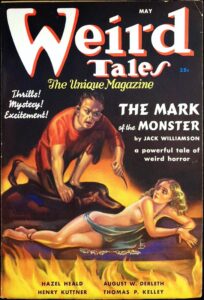
Pulp magazines, named for the cheap pulp wood paper they were printed on, were introduced around 1896 and continued into the mid-1950s. It was because of these inexpensive magazines we have many of the genres we enjoy today. The Sword and Sorcery subgenre of fantasy was created in the pulps by Robert E. Howard; if the name is familiar, he gave us Conan the Barbarian. The first hard-boiled crime story was by Carroll John Daly. The Shadow, who helped shape comic books into what they are today, was created by magazine publishers Street & Smith and writer Walter B. Gibson. We wouldn’t have Star Wars if it weren’t for the space operas that first appeared in the pulps. And, of course, they featured horror stories, which brings us back to the point of this post – or, at least, gets us back on the intended track.
Aside from your average horror stories (or, rather, above average, depending on who you ask), a man named Howard Phillips Lovecraft introduced us to cosmic horror. He gave us Azathoth, the Necronomicon, and arguably his most popular creation, Cthulhu, and then he invited others to come and play in his horrific sandbox free of charge. (He may have been the originator of the open-source concept.) And come they did, bringing new characters, places, and horrors.
New Favorites
Writers like the aforementioned Robert E. Howard, a young man by the name of Clark Ashton Smith, and a gentleman who has become one of my favorites although I have never read his most famous work, Robert Bloch. (He is the author of Psycho if you are curious.) There are many more names I could add to this list; Henry Kuttner, C. L. Moore (Henry Kuttner’s wife), Frank Belknap Long, Jr., and so forth. While known mostly for different genres, these, and so many others, produced some of the best horror stories I have ever read. Other writers I now enjoy now include Algernon Blackwood, Ambrose Bierce, and Seabury Quinn. What drew me to each of these authors and their style of horror was that each of them, in their own way, were masters of the subtler side of the genre.
Shout Out To Discount Book Sellers
Thanks to discount book sellers, I have begun to amass a nice little collection of books from these and other authors for a fraction of what the divorce would have cost had I paid full price. Many of the books are anthologies, though a few of them are collections of stories from the individual writers. My main source of used books, books I can find nowhere else, is ThriftBooks. You can find them at thriftbooks.com. Not only do they have a huge selection of books, but they also list the condition of the books.
If you purchase used books from another seller, leave their name in the comments and share a little bit about why you like them. I will gladly pass it along.
Horror On the Silver Screen
I am not a fan of slasher movies, but I won’t hold it against you if our opinions differ. Actually, if you ignore the over-the-top violence, many of these movies have pretty good story ideas as their bases. As far as movies go, I would rather watch something from the Hammer era or older.
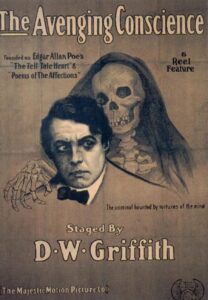
Since I put forth the question about the first horror novel, what do you think the first horror movie was? To answer this question, we have to go to France in the year 1896, the year before Bram Stoker wrote Dracula. Georges Méliès, a French illusionist, released a 3-minute-long silent movie called The House of the Devil; a year later, he re-released it under the name The Haunted Castle. In 1908, the Selig Polyscope Company released Dr. Jekyll and Mr. Hyde, the first American horror film. On March 18, 1910, Edison Studios gave us our first look at Frankenstein up on the big screen.
The World Stage
The French and Americans weren’t the only ones to enjoy success during the silent era of horror. The Germans entered the studio and proved they could make horror movies as well. In 1920, The Cabinet of Dr. Caligari was released. Many consider this movie to be German expressionism at its finest. Another German film, released in 1922, spent as much time in the courts as it did in the theaters. Nosferatu was intended to be a retelling of Dracula but failed to gain the necessary rights and permission. As a result, Bram Stoker’s estate sued and won, and, as a result, all copies were ordered to be destroyed. Fortunately, not everyone with a copy complied to the court order and the movie survived. I first saw this movie in my early teens, alone and at night, and it seriously freaked me out.
So, where were the English during these early years? They entered the genre in 1901 with The Haunted Curiosity Shop. In 1933, The Ghoul was release as one of England’s first feature-length horror films. A year later, a studio would form that would eventually change the horror film industry completely.
England Goes to the Movies
Hammer Film Productions Ltd. was founded in 1934 by James Carreras and William Hinds. In the early days, they produced drama, comedy, and mystery, and following the end of World War II began to focus on producing film adaptations of popular radio shows. In the 1950s the studio began to try its hand at fantasy and science fiction; it was in 1953, however, that the company stumbled upon the genre which would make Hammer Films an international giant. The movie was The Quartermass Experiment, and its global success was due to the production’s horror elements. The company decided if the world wanted horror, then Hammer would give it to them, and in color, no less. While they continued to produce other genres, Hammer Studios became synonymous with horror. Other studios emulated Hammer Studios, but I don’t believe any managed to achieve the same level of success.
In 1960, Hollywood turned Robert Bloch’s novel, Psycho, into a movie; it is the first proto-slasher film. It was also during the sixties and into the seventies the Italians began their giallo era. Giallo means “yellow” and it takes its name from a series of cheap pulp novels entitled Il Giallo Mondadori, each having yellow covers. These novels were generally crime and mystery novels and their sub-genres, which included thriller-horror. These combined plenty of bloodletting, murder mysteries, a particular atmosphere, a bit of eroticism, and a killer who remained a mystery until the final act. These movies had a big influence on the upcoming sub-genre of slasher movies, which, as I said at the start of this section, I am not a fan of.
I Hear Voices
I honestly thought this would be a small section of the post, almost a footnote; I was wrong. For the past couple of years, I have been listening to blogs. I began with history blogs or, more specifically, a blog about the old west. With my increasing interest in horror, however, I began to search out other blogs, especially ones that centered around H.P. Lovecraft. Since Spotify is my platform of choice, I did a search and found The Lovecraft Vault by HorrorBabble. I recently began listening to other podcasts by HorrorBabble which are as entertaining. Each episode is the narration of a horror story; most are from the pulp era, although they do sprinkle in some a bit older or newer.
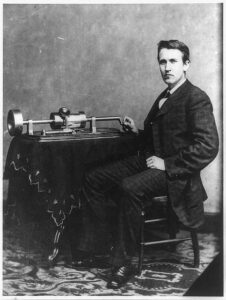
This idea of sharing stories is not a new idea. Audiobooks, or what used to be called talking books, have actually been around for years. As a child, I remember listening to nursery rhymes on the record player (they are called turntables now.) Thomas Edison, upon inventing the phonograph, had the idea of creating phonographic books and recorded “Mary Had a Little Lamb” as a demonstration. Unfortunately, the original recordings were on cylinders and anything over four minutes long was not possible. Records (vinyl) with their grooves didn’t arrive on the scene until the 1930s, making Edison’s dream a possibility.
A Noble Cause
In 1931, the American Foundation for the Blind and the Library of Congress Books for the Adult Blind Project established the Talking Books Program. Their intention was to provide reading material to visually impaired adults and the many World War I veterans who suffered damage to their eyes. The first test recordings was a chapter from Helen Keller’s Midstream and Edgar Allen Poe’s “The Raven.” Because of their intended purpose, the government gave these talking books a copyright exemption and free postal delivery. In an effort to build up a decent catalogue, the United States and Britain shared their recordings.
In 1948, Anne T. Macdonald formed Recording for the Blind & Dyslexic in response to the many World War II veterans who wanted to take advantage of the GI Bill of Rights. They were guaranteed a college education, but due to their eye injuries were unable to read textbooks, they had no way to capitalize on this opportunity. Thanks to the efforts of the RFBD (now Learning Ally), these men were granted access to higher learning. With the invention of the LP that same year, the possibility of creating the needed textbooks became a reality. By 1952, Macdonald had established seven more recording studios across the country.
Technology Advances
1962 brought a new, revolutionizing, invention; the cassette tape. By 1969, several libraries, including the Library of Congress, were distributing books on cassettes. Thanks to technological advances in the 1970s, including the Walkman and cassette players in automobiles, the audiobook took off. Consumers could now listen to their favorite novels while on the go. Further innovations throughout the years brought continued improvements to the business and, in 2005, writer Hugh McGuire asked the question on his blog, “Can the net harness a bunch of volunteers to bring books in the public domain to life through podcasting?”
Which brings me back to HorrorBabble. Thanks to this wonderful podcast, I have been introduced to a host of horror writers I would have never known about. Check them out at horrorbabble.com and find the listening platform that is right for you. You might even discover a new favorite author while you are there.
See, I told you there was more to this than I initially realized. Not only did I not scratch the surface, but I doubt I even smudged it. If you want to learn more about the organizations mentioned in this section, I have included links to their sites. Now, let’s get back to…
The Point of It All
Here it is; after the history lesson, we’ve finally made it back to the point. This is the type of horror story I want to write. The stories that don’t overwhelm you with excessive violence and gore just for the sake of shock value but hit you in the core of your very being. Edith Wharton once said she didn’t believe in ghosts, but went on to state, “but I am afraid of them.” Horror stories aren’t about belief, they are about imagination, and we all know how powerful our imaginations can be. The storyteller should be frightened in the telling of his stories so he can communicate that fear to his readers, she suggests. I want to write the stories that scare (or entertain) me so I can share that with others.
And there is inspiration for these types of stories everywhere. I am constantly pulling up the Notes app on my phone to jot down a brief synopsis for a new story. I currently have four completed stories ready to enter the editing phase and around fifteen more ideas in various stages of planning. The goal is to see them all completed and released in book form; of course, that is every writer’s goal now, isn’t it?




 by
by 
Dan
You didn’t know Cthulhu? I put him on Earth 2, about to eat Vandal Savage…